Monday, April 16, 2012

First Day of School

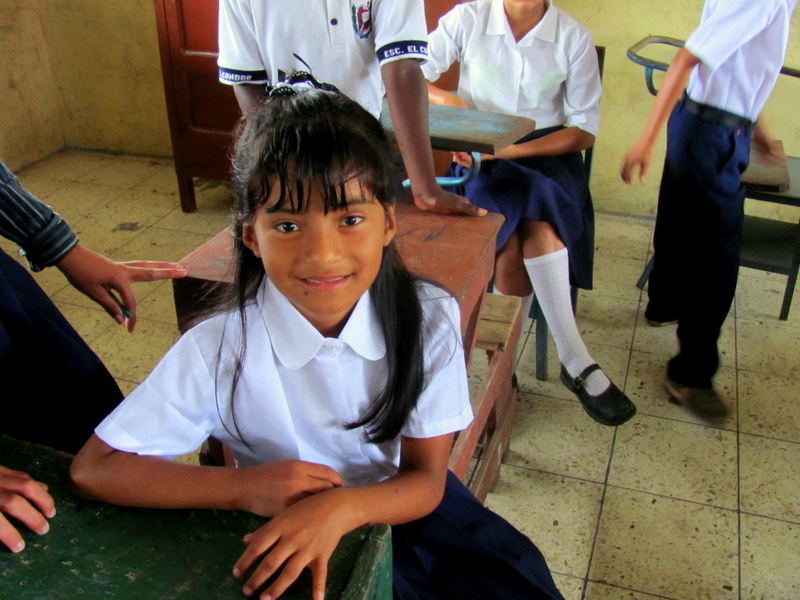
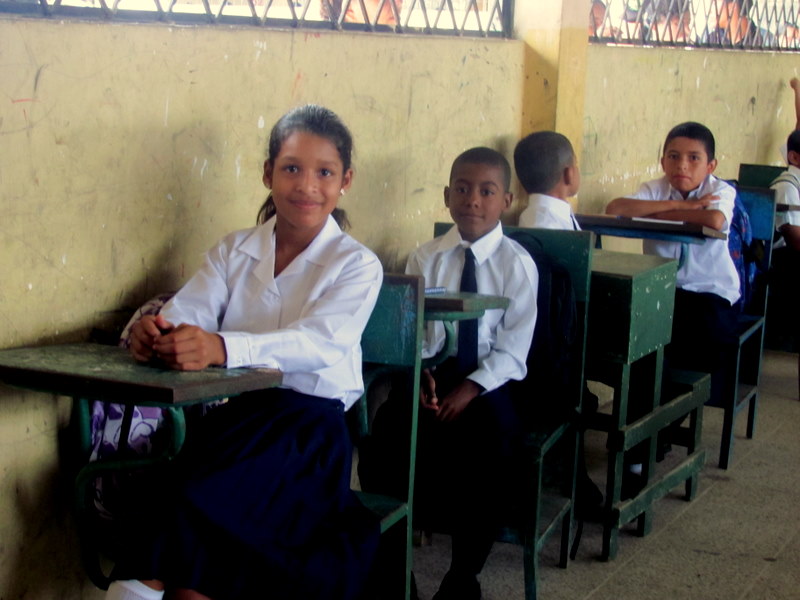
I know some of you don't have Facebook so here are some photos from today...


Jenifer Mendieta

Marena Loor and Jose Rodolfo

Justin Holguin

Angie Manzaba

classroom

Friday, April 13, 2012

Project Dreaming For A Change Begins

After a late start to the school year here in Santo Domingo de los Tsachilas, we are proud to announce that, finally, our project of giving scholarships to more than 25 children in el barrio Laura Flores is off to a great start.

For those who have not checked out the video, my friend Megan and I spent two months creating a short documentary which portrays the lives of 25 kids living in extreme poverty in one of Santo Domingo's most impoverished and at-risk neighborhoods, Laura Flores. Below is the link to our Facebook page, where you will find the short movie and info about the project. Take a look!

http://www.facebook.com/#!/pages/Dreaming-for-a-Change/262619603816610

Thanks to our wonderful sponsors from Seattle, Florida, New Jersey, and California, yesterday we were able to take 25 children and their families on our first round of "back to school shopping." Sponsors donated their time and resources to provide children access to education, for some it will be the first time they have ever been to school. Donations covered general schooling costs: uniforms (which are required for study in Ecuador), backpacks, shoes, notebooks, pencils, pens, etc. Yesterday's events can be described in two simple words- absolute chaos. Heres how it went down:

The day started off with an early bus ride to the neighborhood Laura Flores. Kids and families were found in the local school, where the majority of sponsored kids will be studying this upcoming year, cleaning up and getting ready for the Monday morning school inauguration. Broken desks and books were scattered around the play yard. Kids kicked soccer balls and played as mothers and fathers re-painted cracked walls, swept out classrooms, and picked up trash. Laura Flores is situated on an old citywide garbage dumpyard so, as you can imagine, trash is endless. The mission of the day was to take the 25 kids and their mothers on an all-day shopping spree in Santo Domingo's mercado. While this may sound like an easy task, it isn't. Weaving 25children through rows and rows of fruit, vegetables, clothing, dead cows and chickens, and robbers awaiting us on every corner, somehow we managed to make it out alive. The most difficult part of it all was the fact that we had to bring along $1500 dollars, in a mercado notriously known for theft. Money was shoved under our shirts and pants, and only removed when purchasing materials.

Negtiating fair prices for 25 kids' uniforms was a chaotic event in itself. The dialogue went something like this:

Give me a size 36!
We don't have 36!
Not white, we need blue!
How many?
25!
How much for each?
$13!
Are you crazy?!...we will pay 10.
No way!
Alex, stop hitting your sister.
Justin, don't steal those pants!
Mia, Mia, Mia, Mia, Mia, Mia, Mia, Mia, what time are we leaving?!

It took us 9 hours total to purchase backpacks, uniforms, shoes and socks for our 25 kids. This dialogue proceeded in every single shop we went into. Sweating, feet aching, and an even worse headache, we accomplished our mission. Kids went home smiling, each with their new backpack on their back and shoes in hand. Photos to come tomorrow! Check out our Facebook page for photo updates and videos.

Thank you sponsors!

Tuesday, November 15, 2011

Marta, Charlie y Monos

One of Ecuador's jungle provinces, known as Napo, is home to many interesting people, animals, and natural resources. By far my favorite province so far, Napo's friendly indigenous communities and mischevious monkeys made for an unforgettable experience. Here are some of the people I met during a week-long medical brigade in the pueblo called Misayualli and surrounding communities:

Marta- A 28 year-old female living in a one-story, wooden hut built on sticks to provide protection from torrential rains and poisounous snakes, spiders, and more. A mother of one child, and sibling of many, Marta lives in extreme poverty in a community far into the jungle. We entered her home to find about ten people huddled around on the floor, dirty clothes hanging from the ceiling, an eery silence and fearful eyes from Marta's family members. In the corner we saw Marta. Covered in blankets it was hard to see the little flesh that still hung from her bones but it was apparent she was unhealthily skinny, her skin color (normally very dark) was nearly white, with cracked lips and sunken-in eyes. Our last patient of the day, Marta.
Our medical brigade team consisted of rougly 6 doctors, 4 nurses, a handful of translators (including myself), and 40 volunteers from Microsoft in Seattle. Our mission was a week-long quest into the jungle, treating more than 100 patients a day for 5 days. Doctors, nurses, translators, and volunteers were split up within 8 communities and each day brought new stories and memories never to be forgotten.
Marta's hut could fit no more than 5 of us at a time, with fear of her house falling down, so I was sent with a doctor and an emergency nurse to help her. The trouble was the extreme lack of ability to communicate, not because of language differences but because of cultural differences which made it hard to get the right story. Marta and her family speak Qhechua, one of Ecuador's indigenous languages, so we ultimately were playing a game of phone tag that went something like this:
Doctor: Marta, how long have you been sick?
Me: Por cuanto tiempo ya estas enferma?
Quechua Translator: translate Spanish to Quechua
Marta: reply
Send back the other way.
This went on for about an hour, but the end result left us with frustration and confusion. Marta and her family, according to them, had no idea what happened to her. She did not fall, she was not beaten by her husband, she had no infeccion, they simply told us, "the doctors told us she was sick." Marta had visited the doctors office two months ago, but the family did not have money to keep her there so they brought her home. So there she layed, for two months on a wooden floor, dehydrated, and ready to die. The head doctor for Marta was nervous, she wanted Marta out of there immediately and insisted she go to the hospital. After giving her an IV, we carried her out of the hut, onto our bus, and to the hospital. We left the next day, it is still a mystery what happened.

Charlie: An 11-year old boy from the same community as Marta, atleast an hour from any larger town, very isolated in the jungle. Driving up to Charlie's community, I noticed signs for oil companies (PetroEcuador) and, not surprisingly, was aware of the great presence that oil companies held in this region. I am not sure of the relevance of that information with what I will go on to explain- but, only time will tell. Charlie is son to a mother of five and is one out of four other siblings that suffer from severe mental disabilities and retardation. Charlie is 11, yet he acts as though he is 3 or 4 years old. He was one of the cutest kids I have ever seen, I was instantly drawn to him. Yet Charlie's life is, unfortunately, at risk and unless he recieves further help from Timmy (the medical brigade foundation) could potentially die before he gets much older. Charlie looked sickly, although he wanted to be fun and playful he had a hard time breathing, his forehead was dripping with sweat, and held a severe cough. Not to mention it was hard to interact with Charlie, and he was unresponsive to the doctors or myself. Alone, just Charlie himself, this case would seem manageable. A child with health problems, mental retardation, those cases happen. But, one of four in the family? Charlie, his two sisters, and brother, all suffered from similar symptoms. Here was a family, sitting with us, every one of them suffering from some type of severe ailment. It was scary.
The doctor and I spent over an hour with the family, trying to figure out what could possibily be going on. This family, shockingly, was one amongst MANY families we saw that day that suffered from mental disabilities. Something was wrong, very wrong, in this town. What was going on? Was it the extreme isolation that the community faced, causing for inter-breeding which leads to disabilities? Was this an environmental issue, potentially caused from the nearby oil companies we saw on our drive there? Were people being poisoned? It was shocking.
Charlie and his family will be referred to Quito, where they will recieve medical treatment for Charlie's enlarged liver, other ailments, and hopefully help with his mental disability. Thanks to the Timmy Foundation, the community will continue to be seen and hopefully more evidence will be presented about what is going on there. Only time can tell.

Monos: Mono in Spanish means monkey. I used to love monkeys, well, I still do. But I never realized how mischevious and annoying they can be at times. Misayulli, the pueblo we were based in, is home to hundreds of monkeys who sit around in the town plaza, waiting for tourists and locals to turn their heads away. When they do, the monkeys quietly sneak in, steal whatever they can, and run away before the victim has even realized what happened. They are aggressive, outgoing, and kind of terrifying. I, unfortunately, or fortunately, was a victim to the monkeys twice during my stay in Misayulli. The first interaction occurred in the town's local bar. We were sitting down, eating patacones (fried plantains) when all of a sudden, in walks a monkey. He creeps into the kitchen, steals a bowl full of eggs which he carried out in his hand, and bolts for the plaza. The owner of the restaurant chased after him with a broom, but, she was too slow and lost alot of eggs that day. The monkey then sat, facing the restaurant, and quietly cracked open each individual egg, lining them up in a row after sucking out the eggyoke from each one. He had an expression as though he was completely justified for stealing so many eggs, and sat pleasantly to enjoy the snack. I thought he was really cute, of course, so I went to sit next to him. He didn't seem to mind, as my friend and I sat there talking, watching him eat. We looked away for one second, and I felt something touching my leg. I look over, and the monkey has his paws on me, staring at me in the face.
Monkey interaction number two was even more bizarre, and I am pretty sure a lesson from my grandma Oma. It happened within 15 minutes of the first interaction, with the same monkey who apparently did, or did not, like me I am not sure which. We were having a couple of beers, and I had a pack of cigarettes in front of me on the table. I turn my head because I was getting good at spotting out the monkeys before they attacked, and see a monkey slowly climbing down the pole near where I was sitting. I wasn't worried this time, though, as I was prepared. I spotted him! He could do no harm...wrong. All of a sudden, Mr. Monkey leapt forward, put his hands on my shoulder, grabbed my pack of cigarettes, and ran away! WHAT?! I was shocked, again.
You may think that is funny, I did too. Well, I turned around to watch him run off with my recently opened pack of cigarettes and, as if out of a movie, he began dropping them down one by one from three stories up AND, slowly walked across the telephone wire with A CIGARETTE IN HIS MOUTH. You've got to be kidding me, you crazy monkey! I don't know how often that happens in Misayulli, although I don't think it is uncommon, but I take it as a sign from my grandma Oma to stop smoking. I get it, I do.

These were only three of the hundreds of people that truely impacted my life during this past week in the jungle. I will never forget the amazing trip we had and will be doing more of them later on this year. Thanks for listening!

Friday, September 16, 2011

"Dinner" and a Movie

The little things that are taken for granted. A hot shower, a walk through the grocery store, a 0.25 cent busride. These things occur in my daily life without being given a second thought. It's not until I go into the poorer neighborhoods of Santo Domingo that I realize these commodities, for many people, are rare.

Wednesday afternoon was movie day for the kids of barrios Laura Flores, Cristo Vive, and 12 de Octubre (the three neighborhoods that our organization, Sonando por el Cambio, works in.) Santo Domingo's mayor, a follower of our project, donated 60 movie tickets to our organization to take the kids on a field trip. The majority of the kids had never been to the movie theater before so, needless to say, it was an exciting day for them. Not quite as exciting for myself, though, as I was responsible for all 60 children, as my coworkers had other acitivities to take care of that day. After being in Ecuador for nearly a year and a half, my concept of "being on time" has altered tremendously and I no longer hold great importance in being punctual (being on time just does not happen in Ecuador.) So, we arrived for the 3:00pm movie at 3:20pm. Sprinting down the hallways of Santo Domingo's shopping plaza with 60 kids towards the movie theater, a memory that will never be forgotten. Dodging in and out of shoppers, dragging kids by their arms and legs who fell behind, screaming and laughing as we went, it was quite the sight to be seen.

I'm not sure why I thought I would be able to actually watch the movie we had tickets for. The most I probably sat down to see was a maximum of 2 minutes. Within the first 30 seconds inside the movie theater, atleast 10 kids were screaming my name from the top seats of the theater, they needed the bathroom. "Ok, lets go..." I said. As I waited for them outside of the bathroom, atleast 4 or 5 more would pop out, they, too, needed the bathroom. I waited 5 minutes, then 10 minutes for the kids. After getting impatient, I entered the bathroom to find them not washing their hands or using the bathroom, but instead blowdrying their hair under the hand dryers. I couldn't help but laugh at them, and ask them what they thought they were doing. After basically washing their hair in the sink, they had fallen in love with the fancy hand dryers and were crowded around them to get a turn.

Five more minutes after our return to the movie, a handful more of kids "needed the bathroom." Off we went, again, but this time it wasn't the hand dryers they were after. They wanted popcorn. I accompanied them to the concession stand to watch, painfully, as the kids asked the attendant the prices of every single item the store had to offer. "Three dollars, two dollars, a dollar fifty," she responded coldly as my children got more and more discouraged, as they recounted the 0.20 or 0.30 cents they held in their hands. "It's ok you guys," I explained. "Movie theaters are always really expensive, let's not waste our money here." Trying to make them feel better about the situation was hard, I realized, because all the kids wanted was a snack during the movie. Those kids who did conjure up the sufficient 0.80 cents needed for a tiny candybar walked away unsatisfied, dividing up the meager treat amongst their friends. The realization that these kids had just bought over-priced candy, wasting the 0.80 to $1 their parents could barely afford to give them was heartbreaking for me.

Returning to the movie, I was able to watch a couple more minutes of the movie until the next interruption. "Mia! Mia! Mia!" the kids screamed and ran down to my seat. "Why does it say on our ticket that they will give us CENA?" Looking at their ticket, I see that on each ticket is written, "SENA." Cena, in Spanish, means dinner. As Cena and Sena are similarly spelled, and many of the kids cannot read very well, the rumor had been spread that dinner was on the way. Sadly, I had to explain to them that they don't serve dinner in the movie theater, and that it doesn't say CENA but SENA.

After many more interruptions and occurences, the movie ended and we shuffled everyone to their buses to head home. Reflecting on the afternoon, I was left with saddness for the unfairness and inequality that exists even within a city like Santo Domingo, let alone the rest of the world. Tucked under sheet metal and cardboard houses, these kids will probably never make it out of their social class, even if they want to. Over the course of a year and a half here in Santo Domingo, I have met kids who blow my mind away with their intelligence and desire to do something great with their lives. A 15 year old girl the other week who wants to become Santo Domingo's first woman guitar player to perform publically, a 13 year old boy who wants to be an architect and study engineering, an 11 year old boy that loves math and got 100% on his exam last week. One can only hope they will find a way out of their barrios, out of falling into the norm which is, it seems, to have a baby at age 15 or 16, to live on the streets or join a gang.

A very unique afternoon at the movies...

Philosophy of Rehabilitation Center for Kids

Por que estamos aqui
Estamos aqui, porque queremos ser personas nuevas.
Con deseos de luchar y transformar nuestras vidas
Y nuestros comportamientos.
El dia que nos enfrentamos con nosotros mismos
Comenzaremos a cambiar y a crecer
Expresando los sentimientos
De ira, rechazo y soledad, seremos diferentes.
De lo contrario, no podremos dejar nuestros viejos e inutiles habitos.
En nuestra comunidad, podremos darnos la mano, comprendiendonos, respetandonos y amandonos es aqui.
Donde debemos empezar nuestra nueva vida,
Juntos y comprometidos, con uno mismo y los demas.

Why are we here?
We are here, because we want to become new people.
A desire to fight and transform our lives
And our behaviors.
The day that we confront ourselves
We will begin to change and grow.
Expressing our feelings
Of anger, rejection and solidarity, we will become different people.
On the contrary, we cannot forget our past or our unuseful habits.

In our community, we can give a helping hand,
Understanding, respecting, and loving eachother.
It is here that we should begin our new lives, together and compromised, with ourselves and with eachother.

Wednesday, August 24, 2011

wheels on the bus parte 1 y 2


Transportation in Ecuador makes you pound hands against glass windows and stomp your feet.

It was a Friday night and I was trying to get from one end of Quito to the other. Normally a two hour bus ride but, being Friday, the locals were out to meet up with friends after work. Traffic was thin, tonight's ride would be a breeze.
Things in Ecuador always have a way of working out but, most certainly, never work out in ways one had imagined.
This "breeze" of a bus ride started out smoothly. No traffic, empty bus, we would be at our destination in no time. Ten minutes into the drive, however, the bus driver stopped the bus in the middle of the busy street, in front of Quito's biggest shopping plaza. It was 8:30pm, the mall was closing, and people poured out of the doors to hop on the last bus of the day. A once empty bus quickly filled to the brim, yet still our bus sat in the center of the road. Cars honked in anger, trying to pass us on all sides, and passengers started to get restless. Those 10 minutes turned into 15, and then 15 turned into 20. Suddenly, our "breeze" bus ride now did'nt seem so probable.
More than 20 minutes of waiting and the passengers went wild. All of us, including myself, began stomping our feet, banging on windows, whistling, shouting and then some. "VAMOS!" we screamed. "Let's go! What is wrong with you Mr. Busdriver we've been here for 20 minutes!" they shouted. There was no words from the busdriver, as he clearly did not care about how late he was making his clientele, or think twice about how badly we wanted to get home. "Do you not have a family to go home to?!" one angry man screamed. "If he doesn't hurry up, I have it in me to go up there and hit him," another uttered.
Partially nevous, partially loving this comical encounter, I couldn't help but wonder how a similar situation might have unfolded in the USA. I imagine patience, calmness, potentially irritated passengers sitting quietly, whispering to one another about their anger felt towards such an inefficient system. Not in Ecuador, though. You say what you feel, there is no time for being polite.
Luckily enough for some, another bus going in the same direction as ours pulled up alongside us. This bus driver, in comparison, seemed much more logical about getting to places on time, and much less concerned with making an extra 0.25 cents per passenger. "VAMOS!" our passengers screamed. The majority of the passengers on our "slow bus" jumped up and ran through traffic to catch up with their new ride home. A friend of mine turned to me, saying, "Lets get out of here, we will get home faster on the other one!" My hesitant reply: "Noooo...let's just stay. I am sure our bus will leave soon enough."
And so we sat...5 minutes more and, as if a switch went off, the busdriver was suddenly satisfied with his overcrowded bus space. Off we went. We chugged along for awhile longer, jamming extra bodies here and there into the remaining cracks and crevices. In the distance, we watched as the "speedy bus," once alongside us, roared out of sight and left us in the dust. "I guess you were right," I shamefully admitted to my friend. "We should've gone with the other one." Irritaded, she agreed.
Little did anyone know at the time, our bus driver turned out to be a pretty smart guy. What appeared to be his selfish, sluggish plan turned out to be quite genious.
After getting outside of Quito's more populated neighborhoods, our bus ride changed from what appeared a turtle-speed endeavor to a "hold on for dear life, buckle up your seatbelts (not really...as seltbelts are practically nonexistent in Ecuador), we're goin' for a ride!!" For those who remember Magic School Bus, it was basically the same experience. Now, instead of screaming "Hurry up, let's go!" we now cried (only partially kiddingly), "Slow down! You're going to kill us all!" The whole bus joked together, laughing at the comical situation, as we speeded through Quito's entirety in less than 20 minutes.
And, the best of all? Remember the "speedy" bus that left us in the dust? We passed it. What was once just two busses, driving through the city turned into a fullout race through Quito, seeing which machistic busdriver could outdo the other. We waived to our ex-passengers as we hurled by. With a schreeching stop (wait...actually...the bus didn't even completely stop), we jumped off the moving bus upon arrival at our destination.


Transportation in Ecuador makes you feel light as a cloud and full of bliss.

Sometimes, well, most of the time, it is hard to see the beauty in a place so ugly, so forgotten and so unappreciated like Santo Domingo. Most of the time, you see smog. You see paintchipped walls, beggars with no hands and feet, 9 year old boys with ripped clothes doing kartwheels in the dusty streets to earn a couple of coins. You see macho men who think of you as a piece of meat, a less-than-human, a symbol of sex. You feel hate, you smell smoke, you hear gunshots, you forget the good.
But then, there are days. There are moments. There are sounds, and noises, and colors, and smells that make your 10 months remaining in the Peace Corps feel so sad you want to cry because you can't imagine leaving such a bizarre place you now call home.
Driving in the backs of trucks. A time that I feel most happy about my life. A day playing soccer with dirty children, the winner earns 0.50 cents. And they kick my ass, as usual. I leave them, sweating and out of breath, in awe that 7 to 13 year olds literally run circles around me with a soccer ball. I hop in the back of the truck and off we go. Transportation in Ecuador is unique because you might not make it alive but you just stop caring as much. You let the wind blow through your hair and admire the beauty around you.
The smoggy streets become filled with wonder and excitement. The macho men fade out of your existance. The paintchipped buildings feel comforting. Salsa music blasting from every car, bus, store and house brings passion and love. A beautiful sunset peaks through the shackled buildings and polluted sky, and castes shadows on paths where latina women in tight white spandex and middrift tanktops walk dogs.
And you feel at peace.


Monday, August 15, 2011

the good and the bad

i write today about my experiences because, mostly, i feel a need to vent to the world about the saddness and anger i have seen.
today was a normal day, 2 oclock pm heading to the barrios, neighborhoods, to meet with the children to make bracelets, play soccer, jumprope, lo que sea. upon arrival, two kids pulled me aside and said "marcelo has been shot." i did a double take, saying "what?!" and they told me that marcelo, our 18 year old "group leader," son of a wonderful family, leader of our dance group, my good friend, in the barrio "Cristo Vive" was shot. he is alive, he is well, he wont die, but the whole thing really just got me thinking.
i don't know the story, so i cannot retell it to you all, but the basics are that he was walking home, attempted to be robbed by two ladrones, and resisted, hence being shot and nearly killed. when i saw him, he was laying in bed, in shock, with bloody bandages and a look of fear i have never seen in him. marcelo is my friend, i rely on him. he is known, through rumors, to be homosexual within the community and my organization. he is a true leader, he is confident (as much as he can be living in a very conservative world), true, kind, and helpful. marcelo is strong, in that he openly questions his sexuality, he is the dance instructor, the reason our kids perform salsa, bachata, samba numbers at all of our public events. marcelo is, in my eyes, my reference in the neighborhood.
he was caught in the wrong place, at the wrong time. today i sat with him, held his hand, and told him how much i admired him as a person. he will be ok, he will live, he will probably lose a finger or two. but, his life is most important and he cherishes that.
today i decided i would join the psychology sector of my organization. i have decided to pursue my passion, which is psychology, when i return to the USA. so, in order to gain experience i am learning from local psychologists to understand how it all works down here. i sat through a therapy session with marcelo and the psychologist today, and to say the least it was interesting. the psychologists first question was, "so what good can come out of this experience?" marcelo looked at the psychologist and timidly laughed. "nothing, good, will come out of this experience." the conversation proceeded by the psychologist telling marcelo that, although he has just been shot in the arm and the finger, might lose a finger, their are postives. number one, marcelo has realized his family does love him. he said, "i couldnt tell if my dad ever really cared about me. i know he loves my brothers and sisters, but i never really thought he loved me. but he came, to the hospital, and he was with me." his family does love him, hopefully he sees that. marcelo learned he didnt die, he lived. while he is now in extreme risk, as they reported the situation to the police and are at risk of being pursued by the people that hurt him, he is alive.
the good...marcelo didnt die. hes alive to grow, and to continue being an awesome person. from this experience i see him growing, becoming more confident, and continuing on with life. the bad, an 18 year old boy cant live a normal life, cant walk down the street without danger of dying, cant be who he is without prejudice.
a run-on of emotions. hope this was somewhat coherent.